
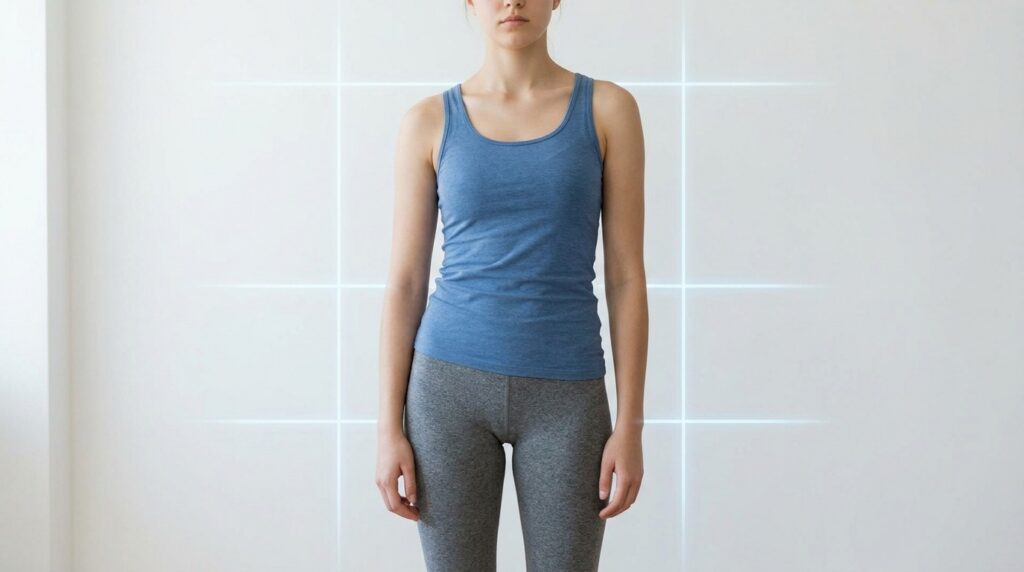
Scoliosis doesn’t always start with pain. For many people, it starts with posture. One shoulder sits higher than the other. The spine looks slightly curved in photos. Clothes don’t hang evenly.
At first, it may not seem like a big deal.
But over time, posture changes can affect how the body moves, balances, and feels. What begins as a small curve can turn into uneven tension, stiffness, or discomfort during everyday activities.
That’s why more people are starting to explore scoliosis posture correction—not just to improve appearance, but to support long-term spinal health.
At Back In Motion, patients often come in with questions about posture and scoliosis. What they usually learn is that posture plays a key role in how scoliosis affects the body.
The Real Concern Behind Scoliosis Posture
The obvious concern is alignment. Uneven shoulders. A slight curve in the spine. A shift in posture that becomes more noticeable over time.
The deeper concern is function.
Will this affect movement?
Will it lead to pain later?
And underneath it all is uncertainty.
Should I do something now, or just monitor it?
Scoliosis posture correction is not just about standing straighter—it’s about helping the body function more evenly.
How Scoliosis Affects Posture
Scoliosis creates a sideways curve in the spine. This changes how weight is distributed and how muscles work.
As a result:
- One side of the body may work harder
- Muscles may tighten unevenly
- Posture may shift to compensate
- Movement may feel less balanced
These changes are not always painful at first, but they can influence how the body adapts over time.
Why Posture Correction Matters
Posture affects more than appearance. It affects how the body handles stress.
When posture is uneven:
- Joints may experience more pressure
- Muscles may fatigue faster
- Movement may become less efficient
- Tension may build in certain areas
Scoliosis posture correction helps reduce these imbalances, making it easier for the body to function comfortably.
What Scoliosis Posture Correction Really Means

Scoliosis posture correction is not about forcing the spine into a perfectly straight position. Instead, it focuses on improving balance, movement, and support.
This may include:
- Improving spinal mobility
- Reducing uneven muscle tension
- Supporting better posture habits
- Encouraging balanced movement
At Back In Motion, care is tailored to each individual. The goal is to help the body adapt in a healthier way.
Why “Standing Up Straight” Isn’t Enough
Many people try to fix posture by simply standing straighter. While awareness helps, it doesn’t address underlying issues.
If spinal joints are restricted or muscles are imbalanced:
- Posture will naturally fall back into old patterns
- Tension will return
- Movement will remain uneven
Scoliosis posture correction requires improving how the body functions—not just how it looks.
Signs Posture May Need Support
Scoliosis posture changes can be subtle, but certain signs suggest the body may need support.
These include:
- Uneven shoulders or hips
- A visible curve in the spine
- Muscle tightness on one side
- Fatigue from standing or sitting
- Difficulty maintaining posture
These signs indicate that the body is compensating.
How Chiropractic Care Supports Posture Correction

Chiropractic care focuses on improving spinal movement and reducing tension.
A scoliosis posture correction approach may help by:
- Restoring joint mobility
- Reducing muscle imbalance
- Supporting better alignment
- Encouraging natural posture improvement
At Back In Motion, care is gentle and personalized. Treatment focuses on improving function rather than forcing change.
What Progress Looks Like
Posture correction is not instant—it develops over time.
You may notice:
- Better posture awareness
- Reduced muscle tension
- Improved balance
- Easier movement
- Less discomfort during daily activities
These improvements build gradually and support long-term health.
What Happens If Posture Is Ignored
Ignoring scoliosis-related posture changes can lead to deeper compensation patterns.
Over time, this may result in:
- Increased muscle tension
- Reduced mobility
- Greater imbalance
- Discomfort later in life
Addressing posture early helps prevent these patterns from becoming more difficult to change.
A Simple Plan for Posture Support
Using the StoryBrand framework, the path forward stays clear.
Step 1: Understand your posture
A focused evaluation looks at spinal movement and alignment.
Step 2: Improve balance and mobility
Chiropractic care helps reduce uneven stress.
Step 3: Maintain healthy habits
Postural guidance supports long-term improvement.
This plan replaces uncertainty with confidence.
Why Local Care Matters in Yorktown
Yorktown residents deal with daily habits that affect posture—school, work, screen time, and busy schedules.
Choosing a local provider ensures care is tailored to real-life routines. Back In Motion focuses on practical, personalized solutions.
Final Thoughts on Scoliosis Posture Correction
Scoliosis posture correction is not just about appearance. It’s about helping the body function more evenly and comfortably.
With the right support, posture can improve, tension can decrease, and movement can feel more balanced.
Over time, these changes help protect long-term spinal health and make daily life easier.