
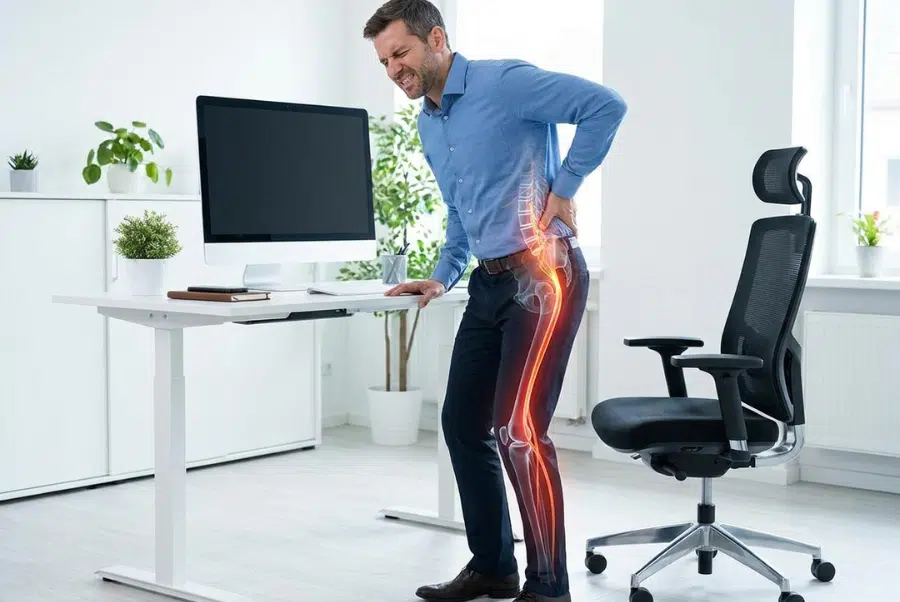
Sciatica pain is commonly caused by pressure or irritation affecting the sciatic nerve, usually from a herniated disc, spinal narrowing, or nerve compression in the lower back. The pain can travel from the lower back down the leg and may include numbness, tingling, or muscle weakness.
Sciatica can disrupt daily activities, especially for office workers who spend long hours sitting. Understanding the causes of sciatica pain can help you recognize symptoms early and seek appropriate treatment before the condition worsens.
According to the National Institute of Neurological Disorders and Stroke (NINDS), sciatica refers to pain caused by injury or pressure on the sciatic nerve, the longest nerve in the body. External medical research also shows that most cases originate from lumbar spine issues affecting nerve roots.
What Is the Sciatic Nerve?
The sciatic nerve begins in the lower spine and travels through the hips, buttocks, and down each leg. It controls several muscles in the legs and carries sensation signals between the legs and brain.
When this nerve becomes compressed or inflamed, people may experience:
- Sharp shooting pain
- Burning sensations
- Tingling
- Numbness
- Weakness in the leg
Many patients first notice symptoms after prolonged sitting, lifting heavy objects incorrectly, or sudden twisting movements.
Herniated Disc Sciatica
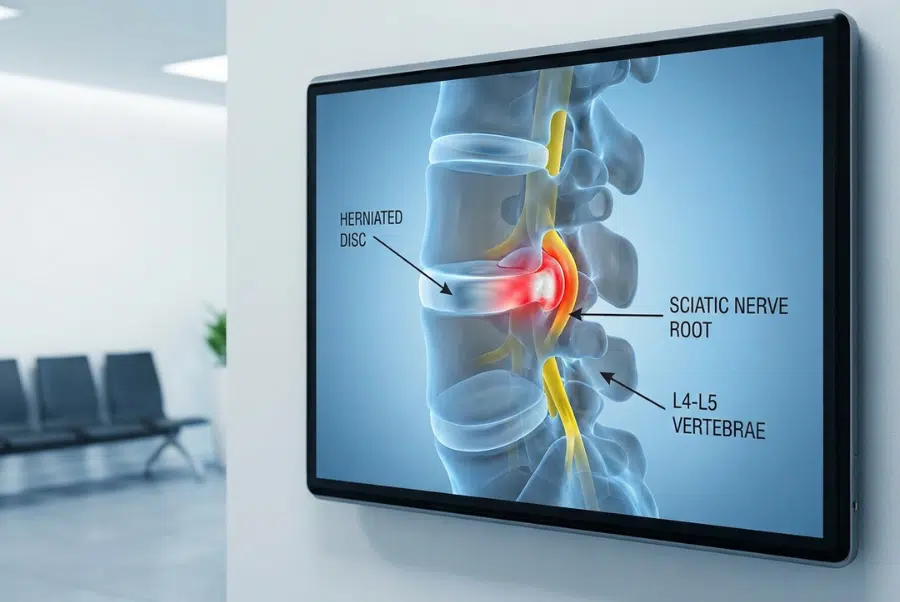
One of the most common causes of sciatica pain is a herniated disc.
Between each spinal vertebra are discs that act as cushions. If a disc bulges or ruptures, it can press directly against nearby nerve roots that form the sciatic nerve.
A herniated disc sciatica condition may cause:
- Pain radiating down one leg
- Increased pain while sitting
- Weakness in the calf or foot
- Difficulty standing for long periods
The Mayo Clinic notes that herniated lumbar discs are among the leading causes of sciatic nerve irritation.
People with desk jobs or poor posture are often at greater risk because spinal pressure increases during prolonged sitting.
Nerve Compression From Spinal Stenosis
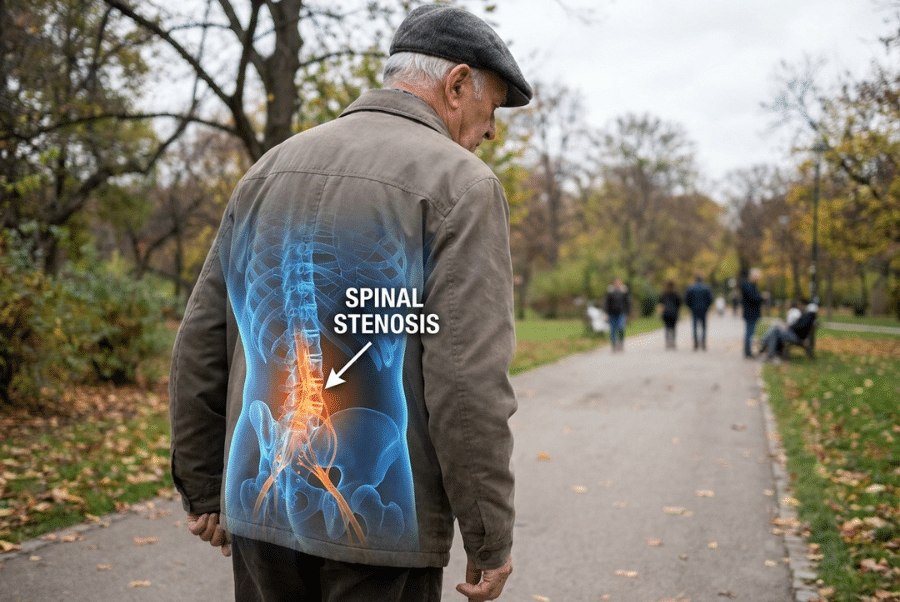
Spinal stenosis occurs when the spaces inside the spine narrow over time. This narrowing can place pressure on nerves in the lower back.
Sciatica caused by spinal stenosis is more common in older adults due to age-related spinal degeneration.
Symptoms may include:
- Leg pain during walking
- Tingling in both legs
- Reduced mobility
- Relief while leaning forward or sitting
Unlike temporary muscle soreness, nerve compression from spinal stenosis often becomes progressively worse without treatment.
The American Academy of Orthopaedic Surgeons explains that lumbar spinal stenosis is a frequent source of chronic nerve pain and walking difficulty in adults over 50.
You can reference their information here: AAOS Lumbar Spinal Stenosis Overview
Piriformis Syndrome and Muscle-Related Compression
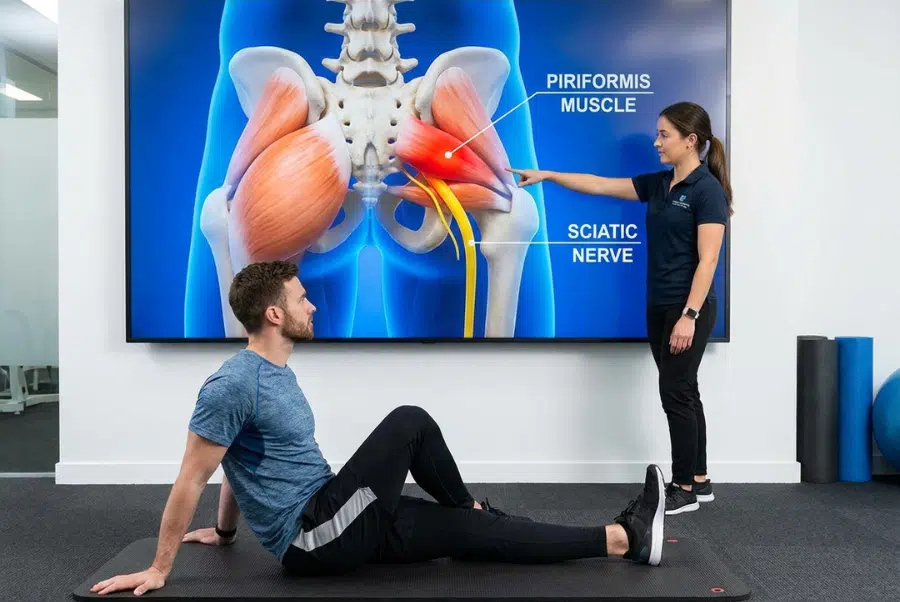
Sometimes the sciatic nerve becomes irritated outside the spine.
The piriformis muscle, located deep in the buttocks, can tighten or spasm and compress the sciatic nerve. This condition is known as piriformis syndrome.
Common triggers include:
- Long periods of sitting
- Repetitive athletic activity
- Muscle imbalance
- Hip injuries
Piriformis-related sciatica may feel worse after climbing stairs, running, or sitting on hard surfaces.
Stretching and mobility exercises may help reduce muscle tension.
Degenerative Disc Disease
As people age, spinal discs naturally lose hydration and flexibility. This process is called degenerative disc disease.
When discs wear down, vertebrae may move closer together and irritate surrounding nerves.
This can contribute to:
- Chronic lower back pain
- Intermittent sciatic symptoms
- Reduced spinal flexibility
- Increased pain during movement
Degenerative changes do not always cause pain, but when nerve structures become involved, sciatica symptoms can appear.
Research published by Harvard Health indicates that degenerative spinal changes become increasingly common after age 40 and may contribute to chronic nerve irritation.
Lifestyle Factors That Increase Sciatica Risk
Several lifestyle factors can increase the likelihood of developing sciatica pain.
Poor Posture
Slouching while sitting places stress on the lumbar spine and discs.
Sedentary Lifestyle
Weak core muscles reduce spinal support and may increase pressure on spinal nerves.
Obesity
Extra body weight increases strain on the lower back.
Improper Lifting
Twisting while lifting heavy objects can damage spinal discs.
Repetitive Movements
Frequent bending, lifting, or prolonged driving may aggravate the sciatic nerve.
Many office workers develop sciatica gradually due to a combination of prolonged sitting and poor ergonomic habits.
When Sciatica May Require Professional Evaluation
Occasional nerve irritation may improve with rest and conservative care. However, certain symptoms should not be ignored.
Seek professional evaluation if you experience:
- Progressive leg weakness
- Loss of bladder or bowel control
- Severe numbness
- Pain lasting several weeks
- Difficulty walking normally
Some patients explore non-surgical approaches to manage nerve-related symptoms. Conservative care options may include mobility work, spinal support strategies, and guided rehabilitation.
For additional information about treatment approaches, visit the Sciatica Nerve Pain Treatment page from Back in Motion.
Frequently Asked Questions
Can sitting too long cause sciatica?
Yes. Prolonged sitting increases pressure on the lower spine and may irritate the sciatic nerve, especially when posture is poor. Office workers commonly experience worsening symptoms after extended periods at a desk.
Is sciatica always caused by a herniated disc?
No. Although herniated discs are a leading cause, spinal stenosis, piriformis syndrome, degenerative disc disease, and injuries can also contribute to sciatic nerve pain.
Can exercise help relieve sciatica pain?
Gentle stretching and strengthening exercises may help reduce pressure on the sciatic nerve. However, exercises should match the underlying cause of symptoms to avoid aggravating the condition.
Does sciatica go away on its own?
Some mild cases improve within several weeks with rest and activity modification. Persistent or severe symptoms may require professional evaluation and treatment guidance.
What does nerve compression feel like?
Nerve compression may cause burning pain, tingling, numbness, weakness, or shooting sensations that travel from the lower back into the leg.
Conclusion
Sciatica pain is usually the result of nerve compression or irritation affecting the sciatic nerve. Herniated discs, spinal stenosis, piriformis syndrome, degenerative changes, and lifestyle factors can all contribute to symptoms.
Understanding the underlying cause is important because effective treatment often depends on identifying the source of nerve irritation. Early attention to posture, movement habits, and spinal health may help reduce the risk of long-term discomfort.
Learn More About Sciatica Treatment Options
If sciatica symptoms are affecting your daily activities, understanding the underlying cause can help you explore appropriate treatment options and long-term spinal health strategies.
Back in Motion provides information and conservative care options for individuals dealing with sciatic nerve pain and related spinal conditions. You can learn more through their Sciatica Nerve Pain Treatment page or contact the clinic directly for additional guidance.
Back in Motion in Yorktown, VA
4102 George Washington Memorial Hwy
Yorktown, VA 23692
Phone: (757) 234-6222
Contact Page: Contact Back in Motion