
Imagine this — the crowd is roaring, your playlist’s at its peak, and you’re about to hit mile 10. Your breathing’s steady, but there’s that one tight spot in your hip that keeps whispering, “Not today.”
That’s where chiropractic care comes in.
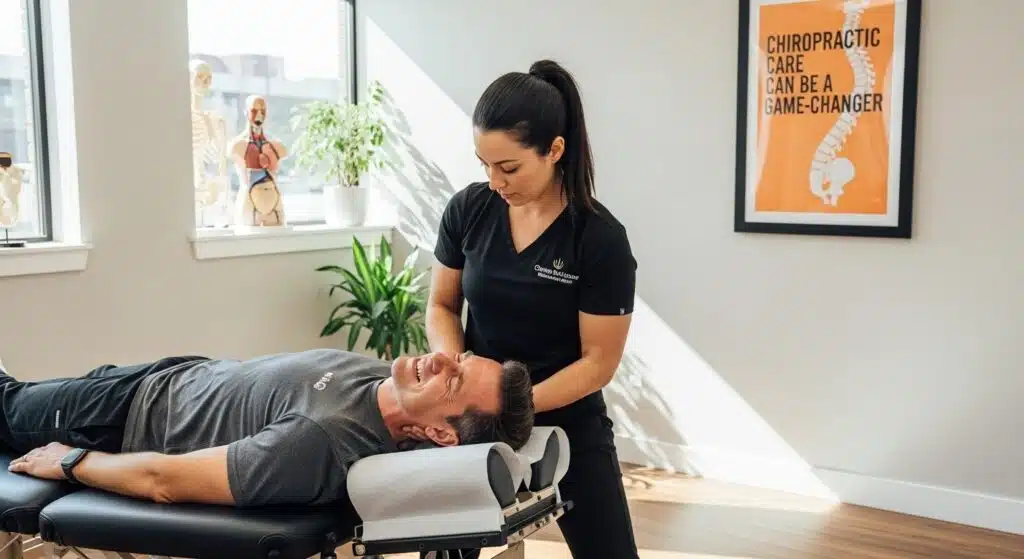
Most people think chiropractors just crack backs. But for runners, chiropractic care can be a game-changer — helping fine-tune the body so every step feels lighter, smoother, and more controlled. Whether you’re training for your first 5K or your next marathon, your spine, hips, and joints all need to work in harmony.
At Back In Motion Chiropractic & Wellness Center in Yorktown, VA, we’ve helped countless runners discover that balance. This post breaks down how chiropractic can help runners perform better — not through magic, but through science, structure, and smart body mechanics.
Key Takeaways
- Chiropractic care helps runners perform better by improving alignment, range of motion, and recovery.
- Regular adjustments enhance biomechanics, flexibility, and nerve communication for more efficient strides.
- Runners under chiropractic care often experience fewer injuries and faster recovery times.
- Back In Motion Chiropractic & Wellness Center in Yorktown, VA specializes in athlete-focused treatments that help runners move at their best.
The Connection Between Running and Chiropractic Care
Running looks simple — one foot in front of the other — but it’s actually one of the most demanding full-body activities there is. Every stride sends force up through your ankles, knees, hips, and spine. That’s a lot of stress over thousands of steps.
A. The Physical Demands of Running
Repetitive motion equals repetitive stress. Even small misalignments in your feet, pelvis, or spine can compound over time, throwing off your gait and leading to pain or inefficiency.
Common complaints from runners include:
- Knee pain (runner’s knee)
- Shin splints
- IT band syndrome
- Plantar fasciitis
- Lower back tightness or hip discomfort
B. The Role of Alignment in Performance
Your spine houses your central nervous system — the control center for every muscle movement. When vertebrae are slightly out of place, it’s not just your posture that suffers. Your coordination, balance, and stride rhythm can all be affected.Proper alignment ensures that muscles fire evenly and that your joints move through their full range without friction. When everything’s in sync, your body works smarter — not harder — allowing you to run farther with less effort.
How Chiropractic Care Enhances Running Performance

A. Improves Biomechanics and Stride Efficiency
Think of your body like a finely tuned machine. If one gear’s off, the whole system struggles. Chiropractic adjustments restore joint mobility and muscle balance, allowing for smoother, more symmetrical movement.
When your hips and pelvis are aligned correctly, you can extend your stride without overcompensating on one side. That means more power, less drag, and a more efficient gait.
B. Boosts Flexibility and Range of Motion
Tight joints limit stride length and increase injury risk. Chiropractic adjustments work alongside stretching and mobility exercises to keep your joints flexible and responsive.
After an adjustment, many runners report feeling “lighter” — like their legs are finally moving the way they’re supposed to. That’s the result of pressure being released and mobility restored.
C. Enhances Nerve Communication and Muscle Control
Every muscle contraction starts with a signal from the brain. If your spine is out of alignment, that signal can get delayed or weakened. Chiropractic adjustments improve nerve communication, leading to better coordination, reaction time, and muscle performance.
For runners, that translates into better balance, quicker reflexes, and smoother transitions between strides.
D. Reduces Recovery Time
Chiropractic care doesn’t just help prevent injuries — it also helps your body recover faster when they happen. Adjustments improve circulation, reduce inflammation, and boost lymphatic drainage, which means waste products from muscle exertion clear out faster.
After a race or long training session, a quick adjustment can help restore alignment and reduce soreness, allowing you to bounce back sooner.
Injury Prevention for Runners
A. Common Running Injuries Chiropractors Treat
Runners often deal with pain caused by repetitive stress, not sudden trauma. Chiropractors treat the root cause of these issues, not just the symptoms.
At Back In Motion, we regularly help athletes with:
- Shin splints – often from overpronation or misalignment in the lower leg.
- IT band syndrome – caused by pelvic imbalance or tight glutes.
- Achilles tendonitis – from ankle misalignment or poor gait mechanics.
- Hamstring strains – linked to uneven pelvis rotation.
- Plantar fasciitis – from collapsed arches or tight calf muscles.
B. How Proactive Care Prevents Setbacks
Most runners wait until they’re injured to see a chiropractor — but the best results come from regular, preventive adjustments. Routine care helps maintain alignment even as you increase mileage or intensity.
At Back In Motion, our approach combines:
- Targeted spinal adjustments
- Soft tissue therapy (like Active Release or Graston)
- Personalized stretching and strengthening plans
This proactive style of care keeps small issues from turning into major ones that could sideline you for weeks.
Chiropractic vs. Other Athletic Recovery Methods
A. Chiropractic Care vs. Sports Massage
Massage focuses on the muscles. Chiropractic focuses on the skeleton and nervous system.
Massage can release tension, but if your spine or joints are out of alignment, the tension often returns. That’s why the two work best together. Many runners combine chiropractic adjustments and massage for complete recovery — the structure and the soft tissue.
B. Chiropractic Care vs. Physical Therapy
Physical therapy strengthens and retrains muscles after injury. Chiropractic ensures your joints and spine are properly aligned so those muscles can function correctly.
At Back In Motion, we often collaborate with physical therapists for holistic recovery. Chiropractic sets the foundation; PT builds the strength.
Real Stories: How Back In Motion Helps Runners
A. A Marathon Runner’s Comeback
Meet Sarah, a local runner who trained for her first marathon. Around week 12, she started experiencing sharp hip pain that made running unbearable.
At Back In Motion, a thorough exam revealed pelvic misalignment and tightness in her hip flexors. Through a few targeted adjustments and mobility work, Sarah regained full range of motion. By race day, she was pain-free — and she beat her personal record by six minutes.
She said, “It felt like my body was finally moving the way it was designed to.” That’s the beauty of chiropractic — realignment that lets your natural ability shine.
B. Supporting Everyday Runners
Not everyone’s chasing a marathon medal. Some just want to enjoy their morning jog without knee or back pain.Back In Motion works with runners across Yorktown, Newport News, and surrounding Virginia communities, helping them stay active, aligned, and motivated.
When and How Often Should Runners See a Chiropractor
There’s no one-size-fits-all schedule, but here’s a good guideline:
- Active runners: once every 2–4 weeks for maintenance.
- During training season: weekly or bi-weekly adjustments to handle increased strain.
- After races: post-event recovery session to reset alignment.
Your care plan depends on how much you run, your injury history, and your goals. At Back In Motion, each treatment plan is customized — we listen, evaluate, and adjust accordingly.
Combining Chiropractic with Smart Running Habits

A. Warm-Ups and Stretching
Even with perfect alignment, cold muscles can limit performance. Dynamic stretching — like leg swings, lunges, and hip circles — before running keeps joints lubricated and reduces strain.
Chiropractic care enhances flexibility, but movement keeps it.
B. Nutrition and Hydration
Your muscles need fuel and hydration to function properly. Magnesium, omega-3s, and lean protein all support recovery and reduce inflammation — complementing your chiropractic treatments.
C. Posture and Everyday Ergonomics
How you sit, stand, and even sleep affects your spinal alignment. Runners who maintain good posture during non-training hours perform better on the road.
Chiropractors help identify daily habits — like slouching at work or wearing unsupportive shoes — that could sabotage progress.
Conclusion
Running isn’t just physical — it’s mental, emotional, and deeply personal. But when pain or imbalance gets in the way, it can steal that joy and rhythm that keeps you going.
Chiropractic care gives runners their edge back. It helps your body move in sync, keeps your joints healthy, and ensures that your nervous system fires at full strength. Whether you’re chasing a personal best or just love that morning jog along the Yorktown waterfront, chiropractic care can help you perform better — and feel better — every step of the way.
At Back In Motion Chiropractic & Wellness Center in Yorktown, VA, we’re passionate about helping runners achieve their best. Our treatments are tailored to your training, your goals, and your recovery.
Because when your body moves right, your goals move closer.
Ready to run stronger?
Book your sports chiropractic consultation today with Back In Motion Chiropractic & Wellness Center — and experience the freedom of running without limits.
FAQ: Chiropractic Help for Runners
1. Is a chiropractor good for runners?
Absolutely. Chiropractors help runners by improving spinal alignment, reducing tension, and keeping joints moving smoothly. Many runners notice fewer injuries and better endurance after regular adjustments.
2. Does chiropractic help athletic performance?
Yes. Research shows chiropractic adjustments improve joint mobility, neuromuscular control, and muscle coordination — all critical for running performance. Runners often see measurable improvements in speed, efficiency, and recovery.
3. Do athletes get chiropractic adjustments?
All the time. Professional runners, NFL players, and even Olympic athletes rely on chiropractic care to stay competition-ready. It’s a natural, non-invasive way to optimize performance and reduce downtime.
4. How often should an athlete see a chiropractor?
For most athletes, every 2–4 weeks is ideal for maintenance. During heavy training periods, weekly visits can help prevent overuse injuries and maintain peak alignment.
5. What’s better, sports massage or chiropractor?
They serve different purposes — massage relaxes muscles, while chiropractic corrects the structure. The best approach is often a combination of both, tailored to your specific needs.