
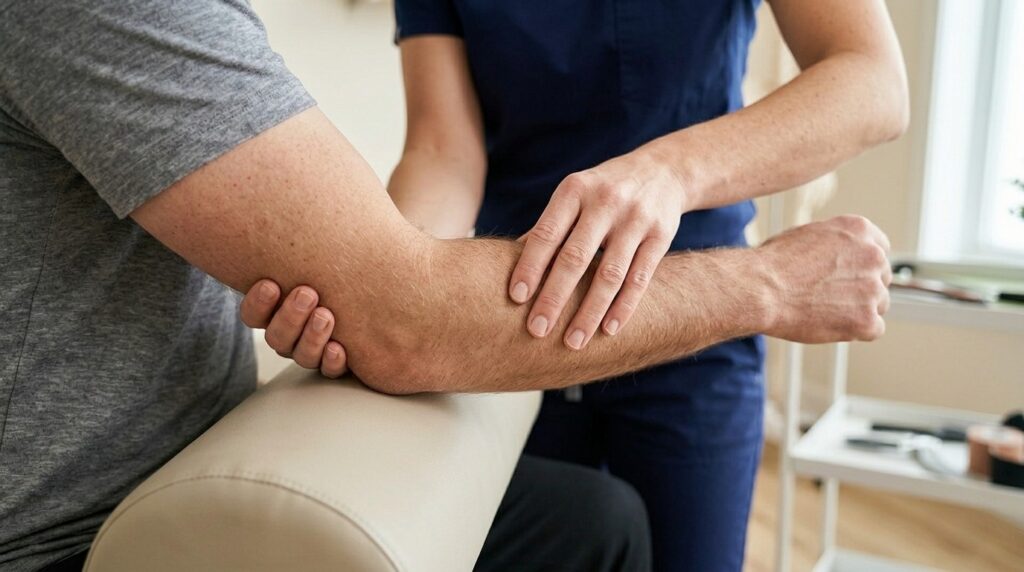
Elbow pain has a way of interrupting everyday life more than people expect. It shows up when you lift something, grip an object, or even just try to straighten your arm. At first, it may feel like a small irritation. But over time, it can become something you notice with almost every movement.
Simple tasks—like carrying groceries, typing, working out, or even shaking someone’s hand—start to feel uncomfortable.
That’s when many people begin searching for an elbow pain treatment chiropractor—not just to reduce pain, but to understand why it keeps happening.
At Back In Motion, elbow pain is often linked to more than just the elbow itself. What patients discover is that real relief comes from addressing how the entire arm and upper body are functioning together.
The Real Problem Behind Elbow Pain
The obvious problem is discomfort. Pain when gripping, lifting, or extending the arm. It may feel sharp, dull, or constant depending on the severity.
The deeper problem is limitation.
You start avoiding certain movements.
You use your other arm more.
You change how you perform daily tasks.
And underneath it all is frustration.
Why isn’t this going away?
Why does it keep coming back?
Elbow pain often becomes a recurring issue because the root cause isn’t being addressed.
What Causes Elbow Pain
Elbow pain can develop from several different factors, but most cases involve overuse or repetitive strain.
Common causes include:
- Repetitive gripping or lifting
- Sports activities like tennis or golf
- Desk work and typing
- Poor wrist or shoulder mechanics
- Muscle imbalances in the arm
- Previous injuries
Conditions like tennis elbow and golfer’s elbow are often the result of repetitive stress rather than a single injury.
Why Elbow Pain Keeps Coming Back
Many people treat elbow pain by resting the arm or using temporary solutions. While this can reduce irritation, it doesn’t always fix the underlying problem.
If movement patterns stay the same:
- Muscles continue to overwork
- Stress remains on the same tendons
- Pain returns once activity resumes
This creates a cycle:
Pain → rest → return to activity → pain again
An effective elbow pain treatment chiropractor focuses on breaking that cycle.
Why the Elbow Is Rarely the Only Problem
One of the most important things to understand is that the elbow doesn’t work alone.
The elbow is part of a larger system that includes:
- The wrist and hand
- The forearm muscles
- The shoulder
- The neck and upper back
If any of these areas are not functioning properly, the elbow often compensates.
For example:
- Weak shoulders can increase strain on the elbow
- Poor wrist mechanics can overload tendons
- Neck tension can affect nerve function
This is why treating only the elbow often leads to temporary relief.
How Chiropractic Care Helps Elbow Pain
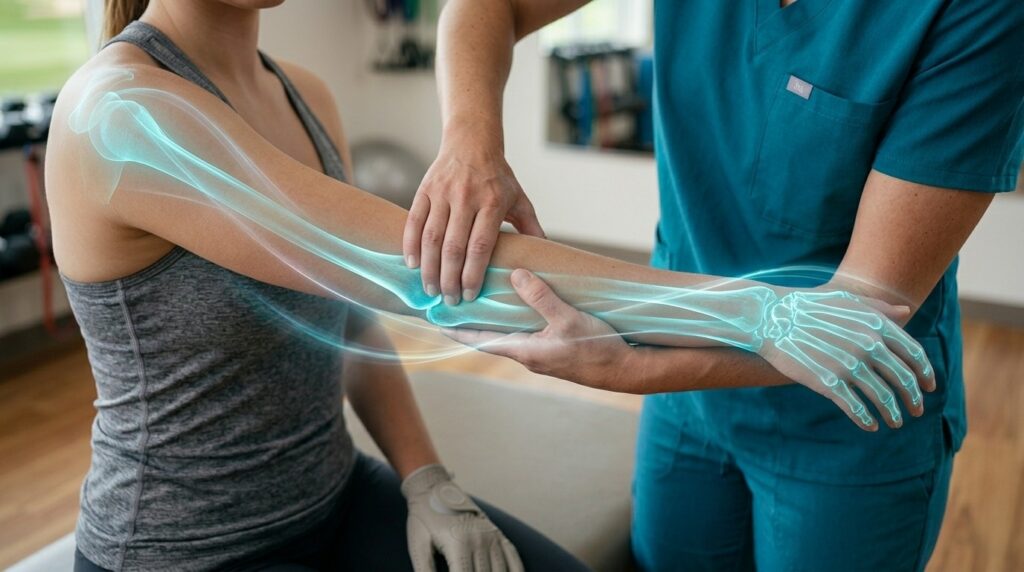
Chiropractic care focuses on improving how the entire upper body moves and functions.
An elbow pain treatment chiropractor may help by:
- Restoring joint mobility in the elbow, wrist, and shoulder
- Reducing muscle tension in the forearm
- Improving alignment and movement patterns
- Supporting better posture
- Reducing stress on irritated tendons
At Back In Motion, care is tailored to each patient’s movement patterns and daily activities.
The goal is not just to reduce pain—but to prevent it from returning.
Elbow Pain Treatment Tips for Faster Relief
1. Reduce Repetitive Strain
Identify movements that aggravate the elbow and modify them when possible.
2. Improve Grip Mechanics
Avoid gripping too tightly or for extended periods.
3. Support the Whole Arm
Strength and mobility in the shoulder and wrist reduce stress on the elbow.
4. Avoid Pushing Through Pain
Pain is a signal. Ignoring it can worsen the condition.
5. Seek Early Treatment
Addressing elbow pain early often leads to faster recovery.
Signs You May Need Chiropractic Care
Not all elbow pain requires professional care, but certain signs suggest it’s time to get evaluated.
You may benefit if:
- Pain lasts more than a few days
- Discomfort returns with activity
- Grip strength feels weaker
- Pain spreads into the forearm
- Movement feels restricted
These signs often indicate deeper issues that need attention.
What Treatment Feels Like
Many people are unsure what to expect from chiropractic care for elbow pain.
Treatment is typically:
- Gentle and controlled
- Focused on precise adjustments
- Combined with soft tissue techniques
- Designed to improve movement—not force it
Patients often notice improved mobility first, followed by reduced pain.
What Real Relief Looks Like
Relief from elbow pain isn’t just about eliminating discomfort—it’s about restoring function.
You may notice:
- Improved grip strength
- Less pain during movement
- Increased range of motion
- Better performance during activities
- Reduced flare-ups
When the elbow works properly again, daily life becomes easier.
What Happens If Elbow Pain Is Ignored
Ignoring elbow pain often leads to compensation.
Over time, this can result in:
- Chronic tendon irritation
- Reduced strength
- Limited mobility
- Increased strain on other joints
Early treatment helps prevent these long-term issues.
A Simple Plan for Elbow Pain Recovery
Using the StoryBrand framework, the path forward stays clear.
Step 1: Identify the cause
A focused evaluation looks at movement patterns and stress points.
Step 2: Restore proper function
Chiropractic care improves mobility and reduces strain.
Step 3: Prevent recurrence
Guidance helps maintain healthy movement patterns.
This plan replaces frustration with clarity.
Why Local Care Matters in Yorktown
Yorktown residents use their arms daily—whether for work, fitness, or everyday tasks. Elbow pain can affect all of it.
Choosing a local provider ensures care is practical and consistent. Back In Motion focuses on real-life movement patterns and personalized treatment.
Final Thoughts on Elbow Pain Treatment Chiropractic Care

Elbow pain can feel small at first—but it can quickly affect how you move and function every day.
The right elbow pain treatment chiropractor looks beyond the elbow to restore balance, reduce strain, and support full recovery.
With proper care, you can move better, feel stronger, and return to your routine without discomfort.