
Back pain has a way of changing how you move, how you sleep, and how you live your day. At first, it may feel like a deep ache or stiffness that comes and goes. Then the pain starts traveling. Down the leg. Into the hip. Sometimes into the arm or shoulder. Suddenly, simple movements feel risky.
For many people, this is the moment they hear the words herniated disc for the first time.
The fear sets in quickly. Surgery. Injections. Long recovery times. Permanent damage.
But here’s what most people don’t realize right away: many herniated disc cases respond extremely well to conservative care. And that’s where a herniated disc chiropractor often becomes part of the conversation.
At Back In Motion, patients often arrive worried they’ve run out of options. What they discover instead is a clear, structured path toward relief that doesn’t start with surgery.
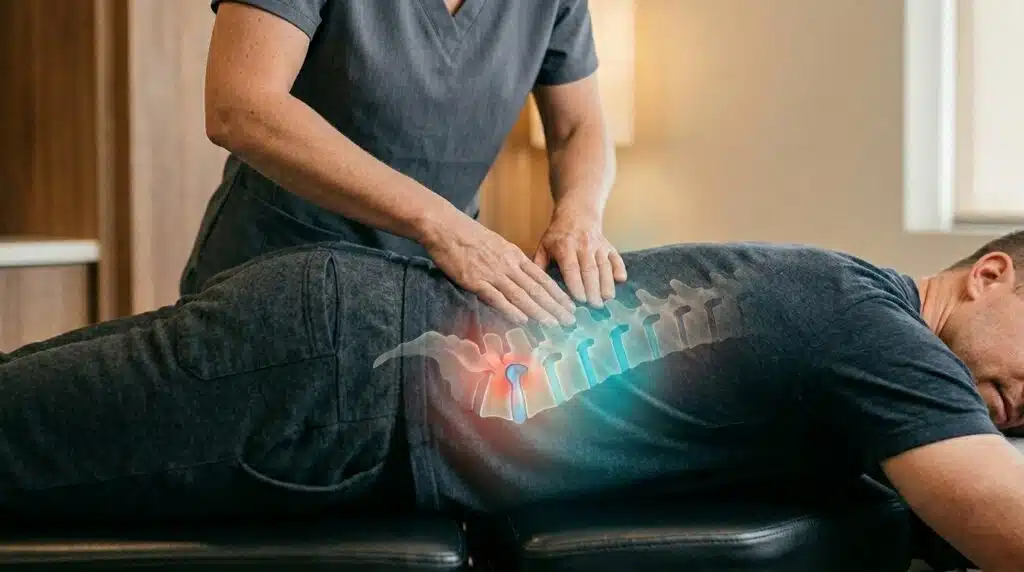
The Real Problem Isn’t Just the Disc
The obvious problem is pain. Sharp, burning, or electric sensations. Pain that worsens when sitting, bending, or standing too long. Weakness or numbness that makes you feel unstable.
The deeper problem is uncertainty. People with a herniated disc often don’t know what movements are safe anymore. They start avoiding activity, second-guessing every step.
And then there’s the unspoken frustration. It doesn’t feel fair that one injury or gradual wear-and-tear can suddenly take control of your routine.
A herniated disc doesn’t just hurt your back. It disrupts confidence in your body.

What a Herniated Disc Actually Is
Between each spinal bone sits a disc that acts like a shock absorber. When healthy, discs are flexible and supportive. A herniated disc occurs when the outer layer weakens and the inner material pushes outward.
That bulge or rupture can irritate nearby nerves. When nerves are irritated, pain doesn’t always stay local. It travels.
This is why herniated disc pain can show up as:
- Sciatica down the leg
- Arm or shoulder pain from the neck
- Tingling or numbness
- Muscle weakness
- Pain that changes with posture
The disc itself isn’t always the biggest issue. The pressure and inflammation around the nerve is what usually causes the symptoms.
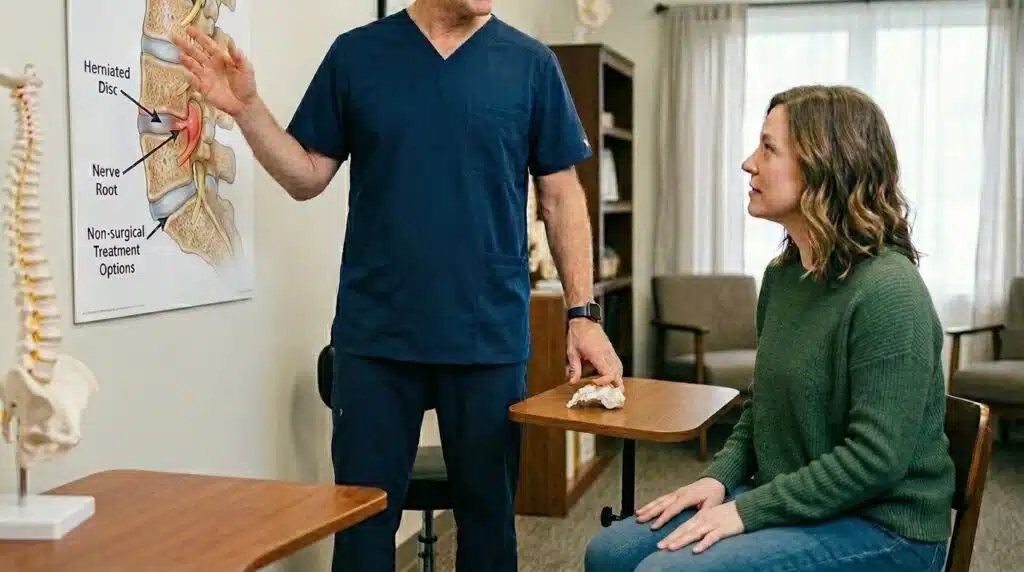
Why Many People Want to Avoid Surgery
Surgery has its place, but it’s rarely the first or only option. Many herniated disc cases improve without it.
People often want to avoid surgery because of:
- Long recovery periods
- Time away from work or activity
- Surgical risks
- Permanent structural changes
A herniated disc chiropractor focuses on reducing pressure, improving movement, and allowing the body to heal naturally whenever possible.
For many patients, conservative care is not just safer. It’s effective.
How Chiropractic Care Helps Herniated Disc Pain
Chiropractic care doesn’t “push a disc back in.” Instead, it focuses on how the spine moves and how pressure is distributed.
When spinal joints aren’t moving properly, certain discs take on more stress than they should. Over time, that stress contributes to disc injury.
Chiropractic care aims to:
- Improve spinal alignment and motion
- Reduce pressure on irritated nerves
- Calm inflammation
- Restore normal movement patterns
At Back In Motion, care plans are built around the location of the disc issue, symptom pattern, and how the injury developed. Treatment is gentle, precise, and designed to avoid aggravation.
Signs You Should See a Herniated Disc Chiropractor
Not all back pain means a herniated disc, but some symptoms suggest it’s time for an evaluation.
Common signs include:
- Pain radiating into the arm or leg
- Numbness or tingling
- Pain that worsens with sitting
- Weakness in the limbs
- Pain that hasn’t improved after rest
Waiting too long often allows compensation patterns to form, which can slow recovery.
Seeing a herniated disc chiropractor early can make care more effective and recovery smoother.
Why Rest and Medication Often Aren’t Enough
Rest and medication can reduce pain temporarily, but they don’t change how the spine moves.
Once movement resumes, the same pressure returns to the irritated disc. This is why pain often flares back up as soon as normal activity resumes.
Chiropractic care focuses on correcting the mechanical stress that keeps triggering symptoms, not just masking discomfort.
What Treatment Looks Like at Back In Motion
Care begins with understanding the full picture. Not just where it hurts, but how the body is compensating.
Treatment may include:
- Gentle spinal adjustments
- Decompression-based techniques when appropriate
- Soft tissue therapy
- Postural guidance
- Activity modification strategies
The goal is to create an environment where the disc can calm down and healing can occur without unnecessary force.
Many patients notice improvement in mobility first, followed by gradual reduction in pain and nerve symptoms.
What Success Really Means
Success isn’t just a pain-free moment. It’s consistency.
It’s being able to sit without fear. Walk without guarding. Move without hesitation.
When spinal motion improves and nerve irritation decreases, patients often regain confidence in their body again. That confidence is just as important as pain relief.
What Happens If a Herniated Disc Is Ignored
Ignoring a herniated disc rarely leads to improvement. In many cases, symptoms become more frequent or more intense.
Muscles tighten to protect the area. Movement patterns change. Other joints take on extra stress.
Early care helps prevent chronic patterns from forming and reduces the chance of long-term limitation.
A Simple, Clear Plan Forward
StoryBrand works best when the plan feels manageable.
Step 1: Get Answers
A focused evaluation determines whether a herniated disc is involved.
Step 2: Reduce Pressure
Chiropractic care restores motion and reduces nerve irritation.
Step 3: Protect the Spine
Movement guidance helps prevent flare-ups and future injury.
This plan replaces fear with clarity.
Why Local Chiropractic Care Matters in Yorktown
Life in Yorktown often includes commuting, desk work, and physically demanding routines. These daily habits place real stress on the spine.
Choosing a local herniated disc chiropractor who understands these demands leads to more practical, effective care. Back In Motion designs treatment around real-world movement, not textbook assumptions.
Final Thoughts on Herniated Disc Chiropractic Treatment
A herniated disc diagnosis doesn’t automatically mean surgery. For many people, it means the spine needs support, not intervention.
A herniated disc chiropractor focuses on restoring movement, reducing pressure, and helping the body heal naturally.
With the right approach, lasting relief is not only possible. It’s achievable without surgery.