
Knee pain has a way of slowing everything down. For athletes and runners, it can feel especially frustrating. One day you’re training, building momentum, and staying consistent. The next, every step feels uncomfortable. Stairs hurt. Squatting feels unstable. Even walking becomes something you think about.
At first, most people assume it’s temporary. Maybe it’s just soreness. Maybe a few days off will fix it. But when knee pain keeps returning—or never fully goes away—it’s often a sign that something deeper needs attention.
That’s when many active adults start looking for a knee pain chiropractor who understands movement, not just symptoms.
At Back In Motion, we regularly work with runners, athletes, and active adults who want more than short-term relief. They want lasting improvement so they can get back to doing what they love.
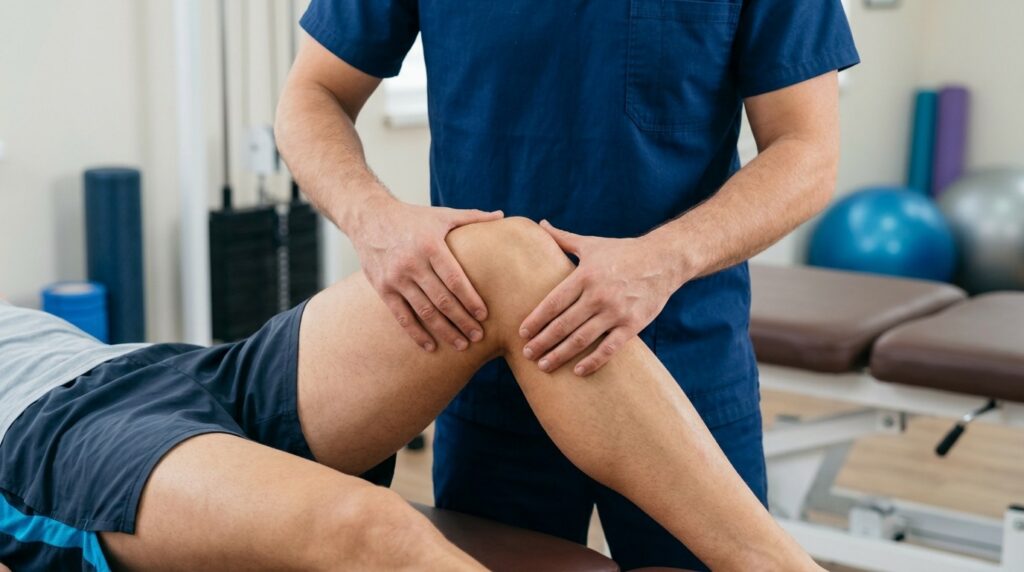
The Real Problem Behind Knee Pain
The obvious problem is discomfort. Sharp pain during runs. A dull ache after workouts. Stiffness that makes warm-ups longer and recovery slower.
The deeper problem is limitation. Knee pain changes how you move. You start compensating without realizing it. You shorten your stride. You favor one side. You avoid certain exercises.
And beneath it all is frustration.
You’ve worked hard to stay active.
Why does your knee keep holding you back?
Knee pain isn’t just about the joint. It’s about lost confidence in movement.

Why Athletes and Runners Experience Knee Pain
The knee is a hinge joint, but it doesn’t work alone. It relies heavily on the hips, ankles, and spine for proper alignment and force distribution.
Common contributors to knee pain include:
- Overuse from repetitive running or training
- Muscle imbalances in the hips or thighs
- Limited ankle mobility
- Poor biomechanics
- Previous injuries that changed movement patterns
Often, the knee becomes painful because it’s compensating for dysfunction elsewhere.
This is why focusing only on the knee doesn’t always solve the problem.
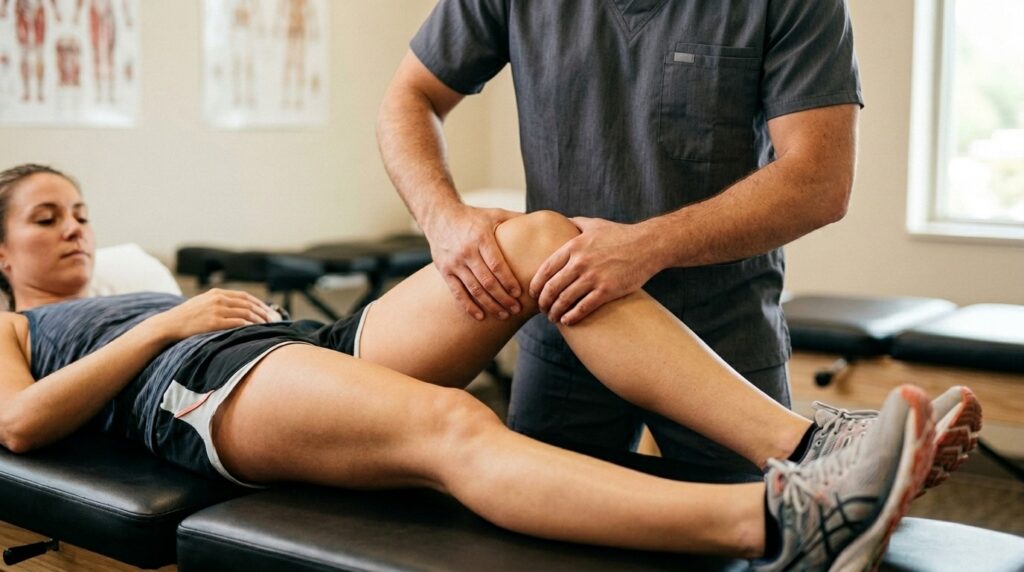
Common Types of Knee Pain Chiropractors See
Athletes and runners may experience knee pain in different forms, such as:
- Runner’s knee
- Patellar tracking issues
- Tendon irritation
- IT band-related pain
- General joint stiffness
While the symptoms may vary, many cases share the same root issue—imbalanced movement patterns that overload the knee.
A knee pain chiropractor looks at the entire kinetic chain, not just the site of pain.
Why Rest Alone Isn’t Enough
Rest can calm inflammation, but it doesn’t correct why the knee became overloaded in the first place.
Once training resumes:
- The same muscle imbalances remain
- Joint restrictions persist
- Compensation patterns continue
This is why many runners feel better during time off, only to have knee pain return once mileage increases again.
Correcting movement dysfunction is key to long-term relief.
How Chiropractic Care Helps Knee Pain
Chiropractic care focuses on restoring proper motion and alignment throughout the body.
A knee pain chiropractor may:
- Improve joint mobility in the knee, hips, and ankles
- Reduce muscle tension and imbalance
- Address spinal alignment that affects lower-body mechanics
- Support better movement patterns during activity
At Back In Motion, treatment is individualized. We evaluate how you run, train, and move—then design care around improving those patterns.
The goal isn’t just to eliminate pain. It’s to improve efficiency and resilience.
Signs It’s Time to See a Knee Pain Chiropractor
You don’t have to wait until knee pain becomes severe.
Consider chiropractic care if:
- Knee pain lasts longer than a week
- Pain returns every time you increase activity
- You feel instability or weakness
- Range of motion feels limited
- You’re compensating during workouts
Early intervention often leads to faster, more complete recovery.
What Treatment Feels Like
Chiropractic care for knee pain is controlled and comfortable. It may include:
- Gentle joint adjustments
- Soft tissue therapy
- Movement and mobility guidance
- Postural and biomechanical recommendations
Many patients notice improved movement before pain fully resolves. As joint function improves, stress on the knee decreases naturally.
What Successful Recovery Looks Like
Recovery isn’t just the absence of pain—it’s restored confidence.
Success looks like:
- Running without hesitation
- Climbing stairs without discomfort
- Completing workouts without flare-ups
- Feeling balanced and stable
When mechanics improve, the knee doesn’t have to work harder than it should.
What Happens If Knee Pain Is Ignored
Ignoring knee pain often leads to compensation. Hips tighten. Ankles stiffen. The opposite leg takes on more load.
Over time, this can create new injuries and longer recovery periods.
Addressing knee pain early protects not only the knee—but the entire lower body.
A Simple Plan for Knee Pain Relief
Using the StoryBrand framework, the path forward stays clear.
Step 1: Identify the Source
A focused evaluation looks beyond the knee to find movement dysfunction.
Step 2: Restore Balance
Chiropractic care improves joint mobility and muscle coordination.
Step 3: Prevent Recurrence
Movement guidance helps support long-term athletic performance.
This plan replaces frustration with clarity.
Why Local Knee Pain Care Matters in Yorktown
Yorktown runners and athletes balance work, family, and training. Schedules are busy, and downtime is limited.
Choosing a local knee pain chiropractor who understands these demands ensures practical, personalized care. Back In Motion focuses on helping active adults recover efficiently—so they can stay in motion.
Final Thoughts on Knee Pain Chiropractic Care
Knee pain doesn’t mean you have to give up running or training. It often means your body needs better alignment and support.
A knee pain chiropractor helps restore movement, reduce overload, and protect long-term joint health.
With the right care, athletes and runners can return stronger—and keep moving forward.