
Headaches have a way of sneaking into everyday life. They interrupt work, ruin weekends, and make even small tasks feel harder than they should be. Many people assume headaches are caused by stress, dehydration, or eye strain. While those can play a role, there’s another common source that often goes unnoticed: the neck.
For a large number of patients, neck related headaches are not random at all. They are the body’s response to tension, stiffness, or dysfunction in the cervical spine. Understanding this connection is the first step toward lasting relief instead of temporary fixes.
At BACK IN MOTION, we see this pattern often. People come in frustrated after trying medications, stretching, or rest, only to find that the headaches keep coming back. Once the neck is addressed, everything starts to make more sense.
The Real Problem: Headaches That Keep Coming Back
The external problem is obvious. You wake up with pain behind your eyes, pressure at the base of your skull, or a dull ache that spreads across your head. You push through the day, hoping it will fade. Sometimes it does. Sometimes it doesn’t.
The internal problem is harder to talk about. Repeated headaches are exhausting. They affect focus, patience, sleep, and mood. Over time, people start to feel stuck, unsure of what to try next.
Then there’s the deeper, unspoken frustration: it doesn’t feel fair that something as simple as turning your head or sitting at a desk could trigger pain that disrupts your entire day.
This is exactly where neck related headaches tend to hide.

Why the Neck Matters More Than You Think
The neck, also called the cervical spine, is responsible for supporting the head, protecting nerves, and allowing smooth movement in all directions. When the neck isn’t moving well, the rest of the body often pays the price.
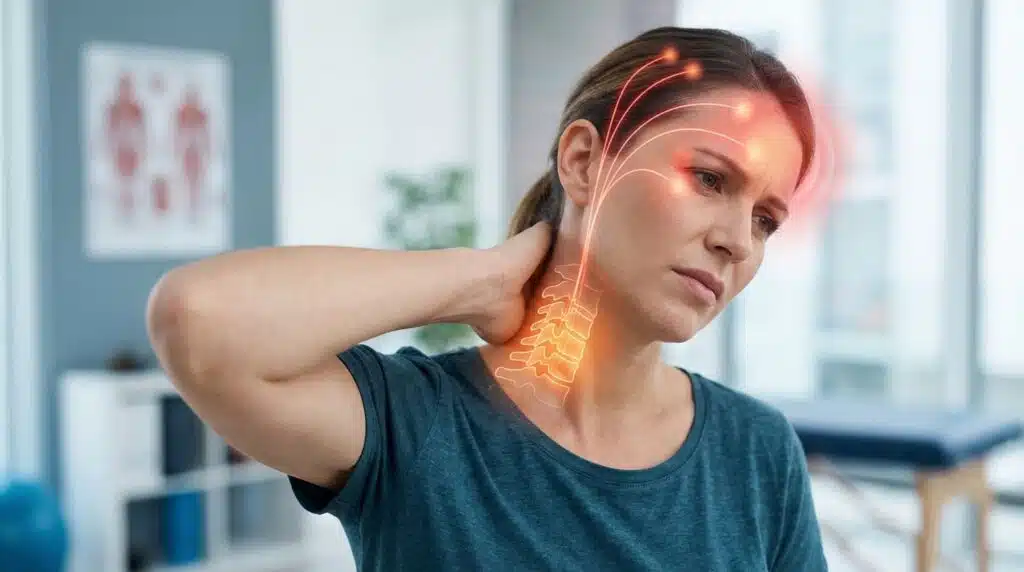
Muscles, joints, and nerves in the neck all share close connections with the head. If these structures become irritated or restricted, pain signals can travel upward, presenting as a headache instead of localized neck pain.
This is why many people are surprised when they learn that their headaches are actually starting in the neck.
Common Types of Neck Related Headaches
Not all headaches feel the same, but many share a common source.
Tension Headaches
These often feel like a tight band around the head. Tight neck and shoulder muscles, usually caused by posture or stress, are a major contributor.
Cervicogenic Headaches
These headaches originate directly from the joints and structures of the neck. Pain often starts at the base of the skull and radiates forward.
Posture-Related Headaches
Hours spent looking down at phones or leaning toward screens place constant strain on the neck. Over time, this strain turns into recurring headaches.
In all of these cases, the neck is not just involved. It’s central to the problem.
How Neck Pain Turns Into Headaches
Neck related headaches usually develop gradually. It’s rarely one big event. Instead, it’s a buildup of small stresses.
Poor posture puts uneven pressure on the cervical spine. Muscles tighten to compensate. Joints lose mobility. Nerves become irritated. Eventually, the body sends warning signals in the form of headaches.
The pain might show up behind the eyes, at the temples, or at the base of the skull, making it easy to mistake the source. Treating only the head ignores the real cause.

Why Medication Alone Often Falls Short
Pain relievers can be helpful in the short term, but they don’t correct what’s happening in the neck. Once the medication wears off, the underlying tension or joint restriction is still there.
This is why many people find themselves stuck in a cycle of relief followed by relapse. The headache isn’t random. It’s mechanical.
Lasting improvement usually comes from restoring proper movement, reducing muscle tension, and addressing postural habits that keep stressing the neck.
The Role of Chiropractic Care in Neck Related Headaches
Chiropractic care focuses on how the spine moves and how that movement affects the nervous system. When the neck is stiff or misaligned, gentle adjustments and targeted therapies can help restore balance.
At BACK IN MOTION, care is never rushed or one-size-fits-all. Each patient’s neck mobility, posture, and daily habits are evaluated to understand why headaches are occurring in the first place.
Treatment plans often include:
- Gentle cervical adjustments to improve joint motion
- Soft tissue work to reduce muscle tension
- Postural guidance to prevent recurring strain
- At-home exercises to support long-term relief
The goal is not just fewer headaches, but better function and comfort overall.
What Success Looks Like
Success isn’t just the absence of pain. It’s waking up without stiffness. Turning your head without hesitation. Getting through the workday without that familiar pressure building behind your eyes.
When neck related headaches are properly addressed, many patients notice improvements in sleep, focus, and energy as well. The body works better when the neck moves the way it’s supposed to.
What Happens If the Neck Is Ignored
Without addressing the neck, headaches often become more frequent and more intense. Postural strain builds. Muscles adapt in unhealthy ways. What starts as occasional discomfort can turn into a chronic pattern.
Ignoring the root cause doesn’t make it go away. It usually makes it louder.
A Simple Plan Toward Relief
StoryBrand works best when the plan is clear and simple.
Step 1: Identify the Source
A focused evaluation determines whether the neck is contributing to your headaches.
Step 2: Correct the Dysfunction
Targeted care restores movement and reduces strain in the cervical spine.
Step 3: Stay Ahead of the Problem
Postural habits and supportive exercises help keep headaches from returning.
This approach removes the guesswork and replaces it with clarity.
Why Local Care Matters
Living and working in Yorktown means long commutes, desk work, and busy schedules. These daily realities put consistent stress on the neck, even when there’s no obvious injury.
Choosing a local clinic that understands these patterns makes care more relevant and effective. BACK IN MOTION provides treatment designed around real-world demands, not generic assumptions.
Final Thoughts on Neck Related Headaches
Headaches don’t always start in the head. For many people, they begin quietly in the neck, building tension over time until the body can’t ignore it anymore.
Understanding the link between neck pain and headaches empowers you to choose care that addresses the real cause, not just the symptoms.
Relief doesn’t have to be temporary. When the neck moves better, life often feels better too