
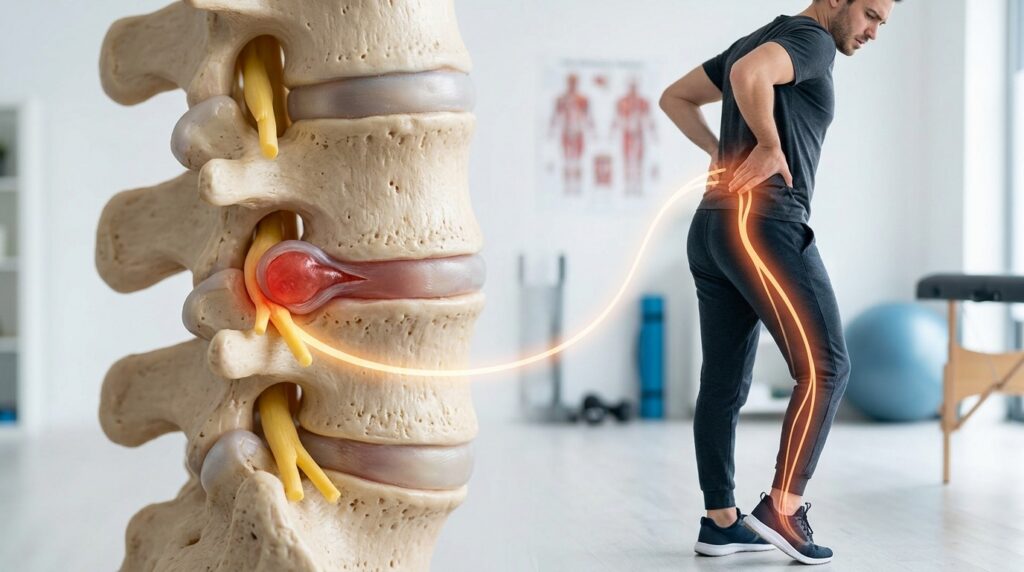
Pain in the leg can feel confusing, especially when it doesn’t seem to come from the leg itself.
You might feel a sharp pain down the back of your thigh. A burning sensation that travels into your calf. Tingling, numbness, or weakness that shows up without warning.
At first, it may seem like a muscle issue. Maybe you pulled something. Maybe you just need rest.
But when the pain keeps coming back—or gets worse—many people realize something deeper is going on.
That’s when they start asking questions about pain in the leg and whether it could be coming from the spine.
At Back In Motion, this type of pain is often linked to herniated discs. What patients discover is that the source of the problem is not always where the pain is felt.
The Real Problem Behind Leg Pain
The obvious problem is discomfort. Pain that travels down the leg, sometimes sharp, sometimes dull, sometimes constant.
The deeper problem is confusion.
Why does my leg hurt when I didn’t injure it?
Why does the pain seem to move?
And underneath it all is concern.
Is this serious?
Will it get worse?
Leg pain connected to the spine can feel unpredictable and unsettling.
What a Herniated Disc Is
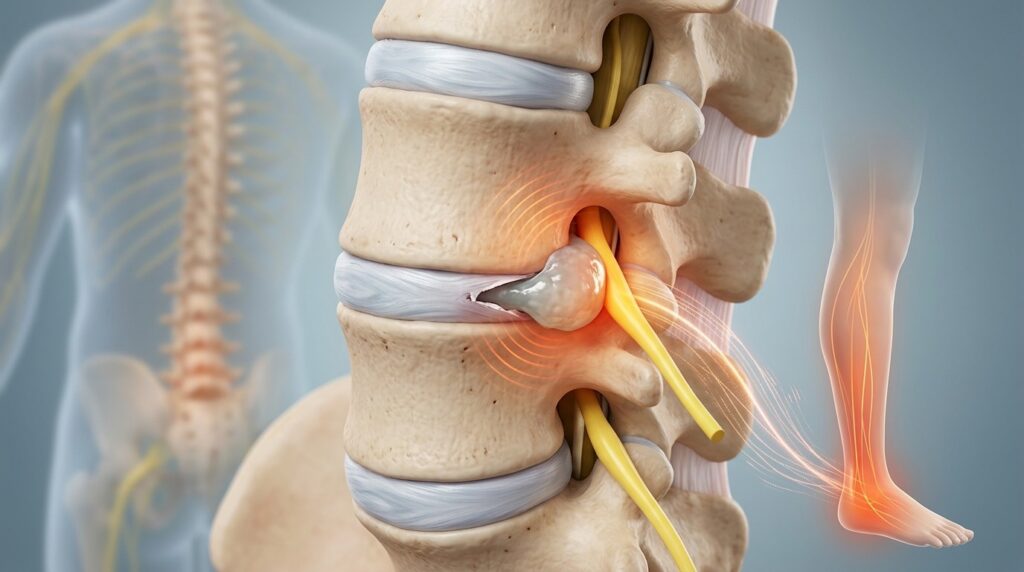
A herniated disc occurs when one of the discs in the spine becomes irritated or damaged.
These discs act as cushions between the bones of the spine. When they are healthy, they absorb shock and support movement.
But when a disc becomes herniated:
- It may bulge or shift outward
- It can press on nearby nerves
- It may cause pain, tingling, or numbness
This is why symptoms are often felt away from the spine—like in the leg.
Why a Herniated Disc Causes Pain in the Leg
The spine contains nerves that travel down into the legs.
When a disc presses on one of these nerves:
- Pain can travel along the nerve pathway
- Sensations may include burning, tingling, or numbness
- Weakness may develop in certain muscles
This condition is often referred to as sciatica.
That’s why pain in the leg may actually begin in the lower back.
Common Causes of Herniated Disc Pain
A herniated disc doesn’t always happen suddenly. It often develops over time.
Common causes include:
- Prolonged sitting
- Poor posture
- Repetitive strain
- Improper lifting
- Aging and disc wear
- Previous injuries
Sometimes, a simple movement—like bending or twisting—triggers symptoms that were already building.
Why the Pain Feels So Intense
Nerve-related pain can feel different from muscle pain.
It may:
- Travel down the leg
- Feel sharp or electric
- Change with certain movements
- Worsen when sitting or bending
Because nerves are involved, even small amounts of pressure can create strong sensations.
Why Rest Alone Doesn’t Always Help
Many people try to manage leg pain by resting. While rest can reduce irritation, it doesn’t always fix the underlying issue.
If the disc continues to press on a nerve:
- Pain may return
- Movement remains limited
- Symptoms may worsen over time
This is why addressing the cause is important.
How Chiropractic Care May Help
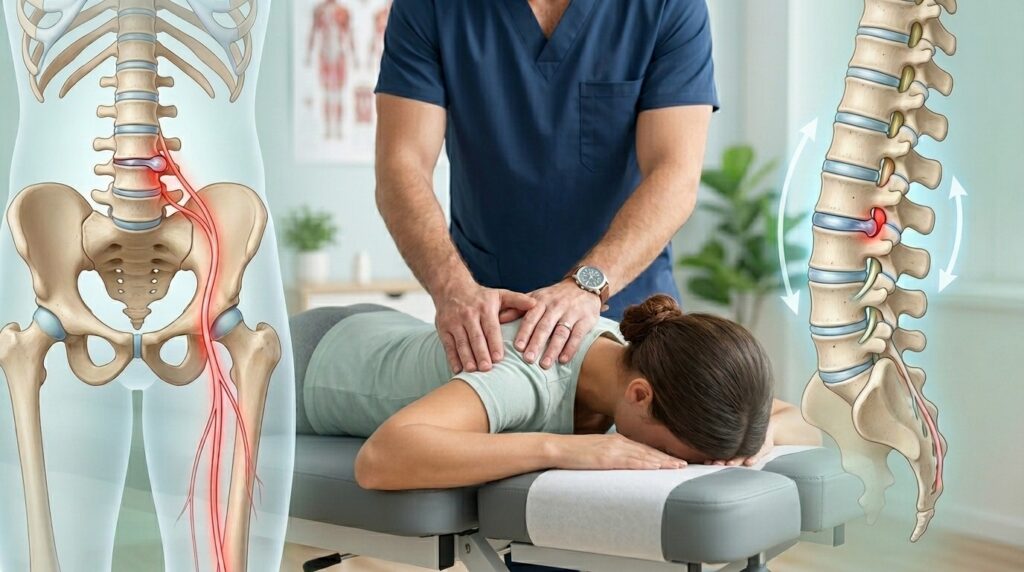
Chiropractic care focuses on improving spinal movement and reducing pressure on nerves.
For herniated disc-related pain in leg, a chiropractor may help by:
- Restoring mobility in the spine
- Reducing nerve irritation
- Improving alignment
- Supporting natural healing
At Back In Motion, care is gentle and tailored to each patient’s condition.
The goal is to reduce pressure—not force movement.
Signs Your Leg Pain May Be Spine-Related
Not all leg pain comes from a herniated disc, but certain signs suggest a spinal cause.
You may benefit from care if:
- Pain starts in the lower back and travels down the leg
- You feel tingling or numbness
- Pain worsens when sitting
- Movement feels restricted
- Symptoms come and go
These patterns often indicate nerve involvement.
What Treatment Feels Like
Chiropractic care for disc-related pain is controlled and precise.
Treatment may include:
- Gentle spinal adjustments
- Soft tissue techniques
- Movement guidance
- Postural recommendations
Patients often notice reduced pressure and improved movement over time.
What Recovery Looks Like
Recovery from herniated disc-related pain in the leg is often gradual.
You may notice:
- Reduced intensity of pain
- Less radiating discomfort
- Improved mobility
- Better comfort during daily activities
With consistent care, many patients return to normal routines.
What Happens If the Condition Is Ignored
Ignoring disc-related leg pain can lead to ongoing nerve irritation.
Over time, this may result in:
- Chronic pain
- Increased numbness
- Reduced strength
- Limited mobility
Early treatment helps prevent these issues.
A Simple Plan for Relief
Using the StoryBrand framework, the path forward stays clear.
Step 1: Identify the source
A focused evaluation determines if the pain is coming from the spine.
Step 2: Reduce pressure on the nerve
Chiropractic care helps improve movement and reduce strain.
Step 3: Maintain spinal health
Posture and movement guidance support long-term recovery.
This plan replaces confusion with clarity.
Why Local Care Matters in Yorktown
Yorktown residents deal with daily habits that affect spinal health—desk work, commuting, and physical activity.
Choosing a local provider ensures care is practical and consistent. Back In Motion focuses on real-life solutions.
Final Thoughts on Herniated Disc Pain in Leg
Pain in the leg can feel alarming—but it often has a clear cause.
A herniated disc can create nerve-related symptoms that travel beyond the spine. Understanding this connection is the first step toward relief.
With the right care, pressure can be reduced, movement can improve, and daily life can become more comfortable again.