
Scoliosis Posture Correction Tips for Better Alignment
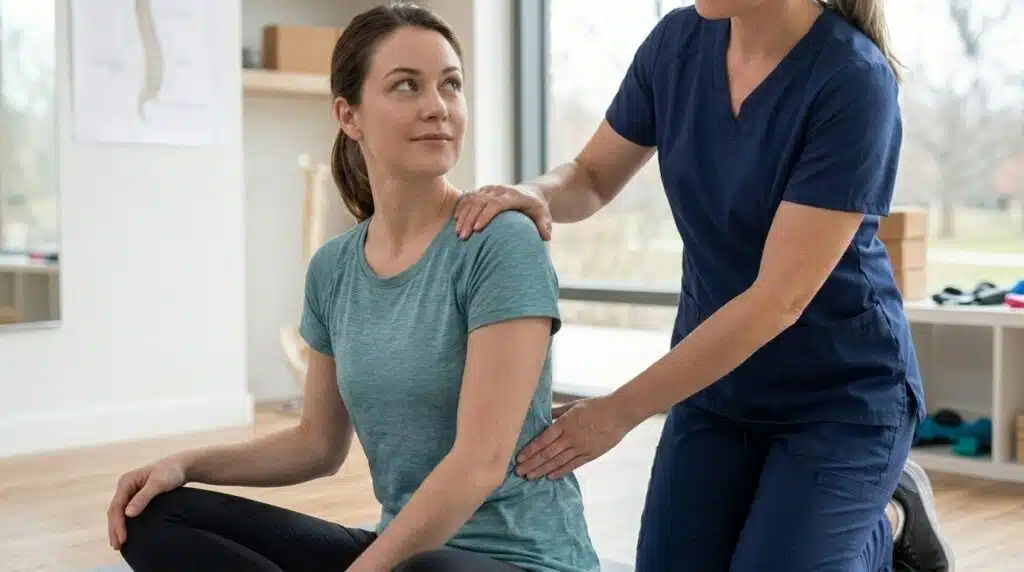
Posture is something most people don’t think about—until something feels off.
You notice one shoulder sitting higher than the other. Your back doesn’t feel as balanced. Maybe your clothes don’t hang the same way anymore. Or someone points out that you’re leaning slightly to one side.
At first, it seems minor.
But over time, posture can affect how your body feels, moves, and functions every day.
For individuals with scoliosis, posture becomes even more important. It’s not just about standing up straight—it’s about how the spine adapts and how the body compensates.
That’s why many people begin searching for ways to improve posture and support better alignment.
At Back In Motion, patients often come in with concerns about posture and scoliosis. What they learn is that improving posture isn’t about forcing the body—it’s about helping it move more evenly and naturally.
The Real Problem Behind Poor Posture
The obvious problem is alignment. Uneven shoulders, a slight curve, or a visible shift in how the body stands.
The deeper problem is imbalance.
One side of the body works harder than the other.
Muscles tighten unevenly.
Movement becomes less efficient.
And underneath it all is uncertainty.
Is this getting worse?
Can posture actually be improved?
For those with scoliosis, posture isn’t just visual—it affects how the body functions.
How Scoliosis Affects Posture
Scoliosis causes a sideways curve in the spine. This changes how weight is distributed and how muscles support the body.
As a result:
- One side of the body may feel tighter
- The other side may feel weaker
- The spine may shift slightly off center
- Posture may look uneven
These changes are often subtle at first, but they can influence movement over time.
Why Posture Matters More Than You Think
Posture affects more than appearance—it affects how the body handles stress.
When posture is uneven:
- Joints may experience more pressure
- Muscles may fatigue faster
- Movement may feel restricted
- Tension may build in certain areas
Improving posture helps reduce these imbalances and supports better overall function.
Why “Just Stand Straight” Doesn’t Work
Many people try to fix posture by simply standing straighter. While awareness helps, it doesn’t address underlying issues.
If the spine and muscles are not balanced:
- The body will return to its привыч patterns
- Tension will continue
- Posture changes won’t last
Posture improvement requires addressing how the body moves—not just how it looks.
Scoliosis Posture Correction Tips That Actually Help
1. Focus on Balanced Alignment
Instead of forcing a straight posture, aim for balance.
Keep your:
- Head aligned with your shoulders
- Shoulders relaxed and level
- Weight evenly distributed
Small adjustments help create more natural alignment.
2. Be Aware of Daily Habits
Posture is shaped by what you do every day.
Pay attention to:
- Sitting position
- Screen height
- Sleeping posture
These habits have a bigger impact than occasional corrections.
3. Avoid Long Periods in One Position
Staying in one position too long increases tension.
Take breaks to:
- Stand up
- Move around
- Reset your posture
Movement helps prevent stiffness.
4. Strengthen and Support the Body
Balanced muscles support better posture.
Focus on:
- Core stability
- Back strength
- Shoulder support
This helps reduce strain on the spine.
5. Address Imbalances Early
Small posture changes can develop into bigger patterns.
Addressing them early helps:
- Prevent long-term issues
- Improve comfort
- Support better movement
How Chiropractic Care Supports Posture

Chiropractic care focuses on improving how the spine moves and functions.
For posture and scoliosis-related concerns, care may help by:
- Restoring joint mobility
- Reducing muscle tension
- Supporting better alignment
- Encouraging balanced movement
At Back In Motion, care is personalized to each patient’s condition and comfort level.
The goal is to support the body—not force it.
Signs Your Posture May Need Support
Postural issues often develop gradually.
You may benefit from care if:
- One shoulder appears higher
- You feel uneven when standing
- You experience recurring tension
- Sitting or standing feels tiring
- You notice changes in alignment
These signs often indicate the body is compensating.
What Improvement Looks Like
Posture correction is not about perfection—it’s about progress.
You may notice:
- Better posture awareness
- Reduced muscle tension
- Improved balance
- Easier movement
- Increased comfort
These changes develop over time.
What Happens If Posture Is Ignored
Ignoring posture issues can lead to deeper imbalances.
Over time, this may result in:
- Chronic tension
- Reduced mobility
- Increased discomfort
- Long-term alignment issues
Addressing posture early helps prevent these patterns.
A Simple Plan for Better Alignment
Using the StoryBrand framework, the path forward stays clear.
Step 1: Understand your posture
A focused evaluation looks at how your body is aligned.
Step 2: Improve balance and mobility
Care helps reduce uneven stress and restore movement.
Step 3: Maintain healthy habits
Postural awareness supports long-term results.
This plan replaces uncertainty with confidence.
Why Local Care Matters in Yorktown
Yorktown residents deal with daily habits that affect posture—work, school, screen time, and physical activity.
Choosing a local provider ensures care is practical and consistent. Back In Motion focuses on real-life solutions that fit your routine.
Final Thoughts on Scoliosis Posture Correction

Posture plays a major role in how your body feels and functions.
For those with scoliosis, improving posture is not about forcing change—it’s about supporting balance, movement, and long-term comfort.
With the right approach, posture can improve, tension can decrease, and your body can feel more aligned and supported every day.