
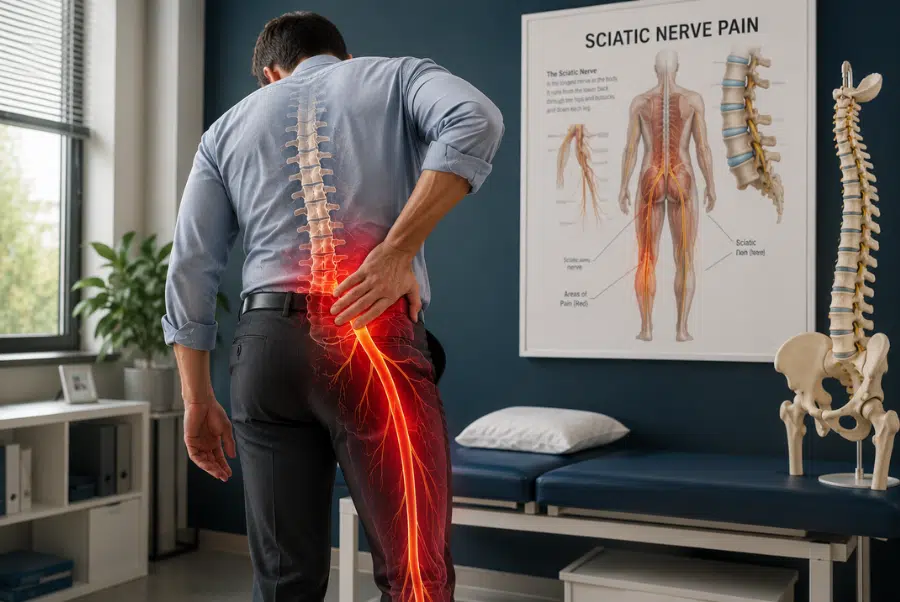
Sciatica is a condition caused by irritation or compression of the sciatic nerve, the largest nerve in the body. It typically causes pain that radiates from the lower back through the hips, buttocks, and down one leg. Symptoms can range from mild discomfort to severe nerve pain, numbness, tingling, or weakness.
Sciatica affects millions of adults each year and is especially common among office workers, people with sedentary lifestyles, and individuals with spinal conditions. Understanding the causes, symptoms, and treatment options can help prevent long-term nerve damage and improve mobility.
Understanding the Sciatic Nerve
The sciatic nerve begins in the lower spine and travels through the pelvis, buttocks, and down each leg. It controls many muscles in the lower leg and provides sensation to much of the lower body.
When this nerve becomes compressed or inflamed, it can trigger symptoms commonly referred to as sciatica nerve pain. Unlike general lower back pain, sciatica usually follows the path of the nerve and often affects only one side of the body.
Common areas affected include:
- Lower back
- Buttocks
- Hips
- Back of the thigh
- Calf
- Foot
Many people first notice symptoms after sitting for long periods, lifting improperly, or experiencing sudden twisting movements.
What Causes Sciatica Nerve Pain?
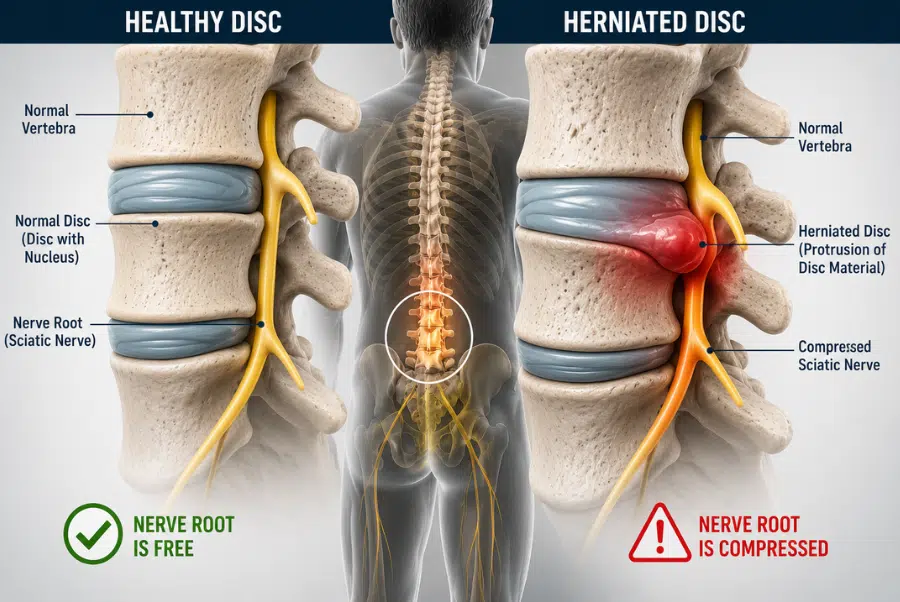
Several underlying conditions can lead to sciatic nerve irritation. Understanding these nerve pain causes is important because treatment often depends on identifying the root problem.
Herniated Disc
A herniated or slipped disc is one of the most common causes of sciatica. This occurs when the soft inner portion of a spinal disc pushes outward and presses against nearby nerves.
Learn more about common spinal triggers in our guide on causes of sciatica.
Spinal Stenosis
Spinal stenosis happens when the spaces inside the spine narrow, placing pressure on nerves. It is more common in older adults and can gradually worsen over time.
Degenerative Disc Disease
As spinal discs naturally age, they lose hydration and flexibility. This degeneration may irritate surrounding nerves and contribute to chronic sciatica symptoms.
Piriformis Syndrome
The piriformis muscle sits deep in the buttocks near the sciatic nerve. If this muscle becomes tight or inflamed, it may compress the nerve and cause radiating pain.
Injury or Trauma
Sports injuries, falls, or accidents can place stress on the lower spine or pelvis and trigger nerve inflammation.
According to the National Institute of Neurological Disorders and Stroke, sciatica symptoms often improve with conservative care, but persistent nerve compression may require further evaluation.
Common Sciatica Symptoms

Sciatica symptoms can vary widely depending on the severity and location of nerve compression.
Typical symptoms include:
- Sharp or burning pain in the lower back or leg
- Tingling sensations
- Numbness in the leg or foot
- Muscle weakness
- Pain that worsens while sitting
- Difficulty standing or walking comfortably
Some people experience intermittent flare-ups, while others develop chronic discomfort that interferes with daily activities.
Mild vs Severe Symptoms
Mild cases may involve occasional tingling or discomfort after prolonged sitting. More severe cases can affect balance, strength, and mobility.
Seek medical attention immediately if symptoms include:
- Loss of bladder or bowel control
- Sudden severe weakness
- Numbness in both legs
- Severe pain after trauma
These symptoms may indicate a medical emergency.
How Sciatica Is Diagnosed
Healthcare providers usually diagnose sciatica through a combination of medical history, physical examination, and imaging studies if necessary.
Physical Examination
A provider may evaluate:
- Reflexes
- Muscle strength
- Range of motion
- Walking pattern
- Pain response during leg raises
Imaging Tests
Imaging is often recommended when symptoms persist or worsen.
Possible tests include:
- X-rays
- MRI scans
- CT scans
- Electromyography (EMG)
The American Academy of Orthopaedic Surgeons notes that MRI scans are especially helpful for identifying herniated discs and nerve compression.
Treatment Options for Sciatica
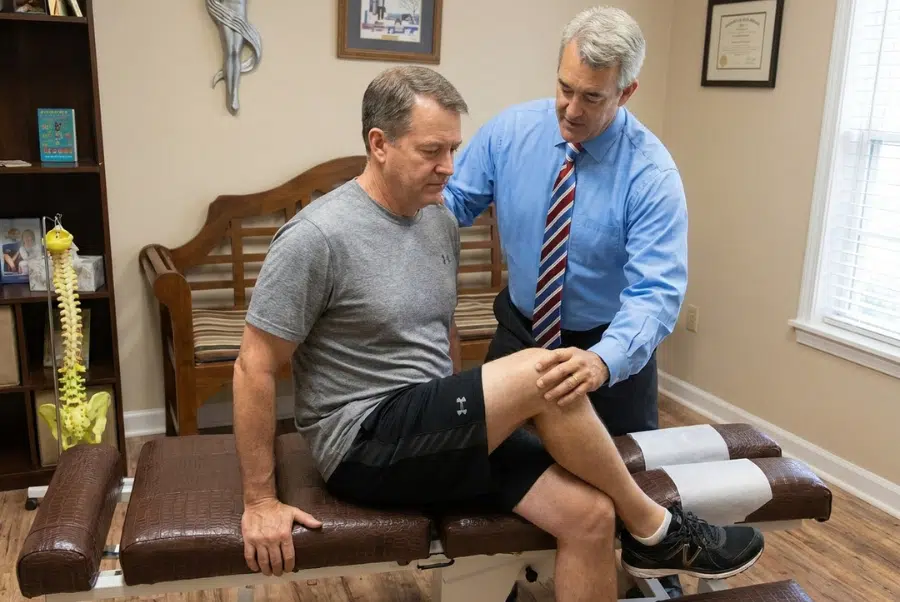
Treatment depends on the severity of symptoms and the underlying cause.
Most people improve without surgery using conservative treatment approaches.
Conservative Sciatica Treatments
Physical Therapy
Physical therapy focuses on improving flexibility, posture, and core stability. Specific movements may reduce pressure on the sciatic nerve and improve mobility.
You can also explore these recommended sciatica exercises that may help support recovery.
Chiropractic Care
Chiropractic adjustments may help improve spinal alignment and reduce nerve irritation in some patients.
For individuals exploring non-surgical care, chiropractic treatment for sciatica may be part of a broader recovery plan.
Medications
Doctors may recommend:
- Anti-inflammatory medications
- Muscle relaxants
- Nerve pain medications
Medication may provide temporary symptom relief but does not always address the underlying mechanical issue.
Heat and Cold Therapy
Cold packs may reduce inflammation during flare-ups, while heat therapy can help relax tight muscles.
Lifestyle Changes
Simple lifestyle adjustments can help prevent recurring episodes:
- Improve sitting posture
- Use ergonomic workstations
- Stay physically active
- Avoid prolonged sitting
- Lift objects properly
When Is Surgery Needed?
Surgery is usually considered only when conservative treatments fail or neurological symptoms become severe.
Situations where surgery may be recommended include:
- Progressive muscle weakness
- Severe nerve compression
- Persistent pain lasting several months
- Loss of function
Comparing conservative care and surgical options can help patients make informed decisions about long-term treatment.
Can Sciatica Go Away on Its Own?
In many cases, sciatica improves over time with rest, activity modification, and conservative treatment.
However, recurring symptoms may indicate an unresolved spinal issue that requires further evaluation.
Factors affecting recovery include:
- Severity of nerve compression
- Overall spinal health
- Activity level
- Posture habits
- Treatment consistency
People who ignore chronic symptoms may increase their risk of ongoing nerve irritation.
Preventing Future Sciatica Flare-Ups
Preventive care is often one of the most effective ways to reduce recurring nerve pain.
Helpful prevention strategies include:
- Maintaining a healthy weight
- Strengthening core muscles
- Stretching regularly
- Improving posture
- Taking movement breaks during work
- Avoiding repetitive strain
Office workers who sit for long periods are especially vulnerable to recurring sciatic nerve irritation.
When Should You Seek Professional Help?
You should consider professional evaluation if:
- Pain lasts longer than several weeks
- Symptoms worsen over time
- Walking becomes difficult
- Weakness develops
- Home remedies stop helping
Persistent nerve pain should not be ignored because prolonged compression may lead to long-term complications.
For patients seeking conservative care options, Back in Motion provides information about sciatica nerve pain treatment services in Yorktown, Virginia.
Frequently Asked Questions
Is sciatica the same as lower back pain?
No. Sciatica specifically involves irritation or compression of the sciatic nerve. While lower back pain can accompany sciatica, the condition usually includes radiating pain down the leg.
How long does sciatica usually last?
Mild cases may improve within a few weeks, while chronic cases can persist for months. Recovery time depends on the underlying cause and treatment approach.
Can sitting too much cause sciatica?
Prolonged sitting can increase pressure on the lower spine and aggravate sciatic nerve irritation. Poor posture may also contribute to symptoms.
What activities should I avoid with sciatica?
Heavy lifting, twisting motions, and prolonged inactivity may worsen symptoms. High-impact activities can also irritate the nerve during flare-ups.
Is walking good for sciatica?
Gentle walking often helps improve circulation and mobility. However, severe pain may require temporary activity modification.
Can exercise cure sciatica permanently?
Exercise can improve flexibility, strength, and spinal support, which may reduce future flare-ups. However, results depend on the underlying cause of nerve compression.
Conclusion
Sciatica nerve pain is a common condition that can significantly affect mobility, comfort, and daily life. Understanding what is sciatica nerve pain, along with its causes, symptoms, and treatment options, is the first step toward effective management.
Many cases improve with conservative care, lifestyle adjustments, and proper diagnosis. Persistent or worsening symptoms should always be evaluated to prevent long-term nerve complications.
Back in Motion in Yorktown, VA
📍 4102 George Washington Memorial Hwy
Yorktown, VA 23692
If sciatica symptoms continue to interfere with your daily activities, understanding the underlying cause may be an important step toward long-term relief and improved mobility.