
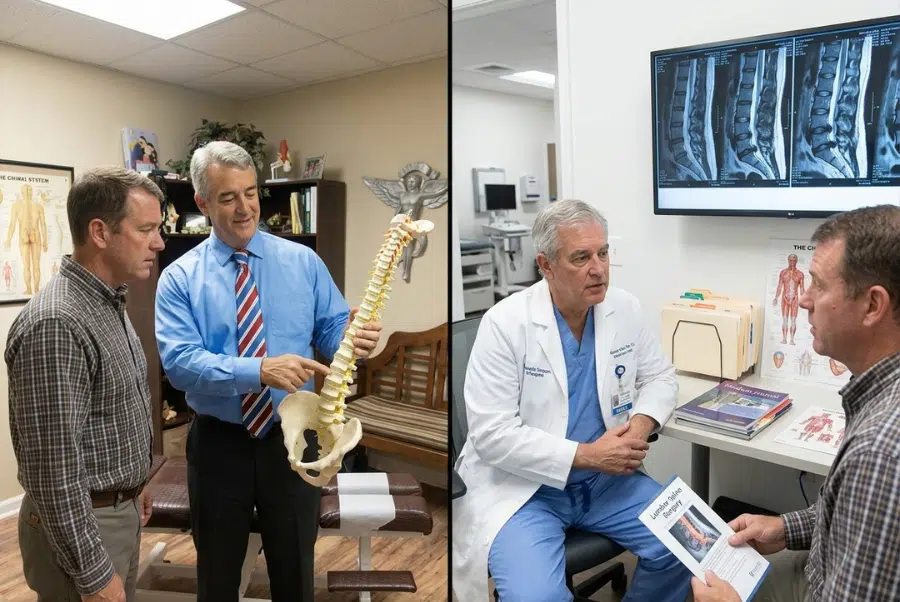
When comparing chiropractor vs surgery for sciatica treatment options, chiropractic care is often considered a first-line, non-surgical approach for managing mild to moderate sciatica symptoms. Surgery may be recommended in severe cases involving progressive neurological deficits, significant muscle weakness, or when conservative treatments have failed to provide relief after several weeks or months.
Sciatica can significantly impact your ability to work, exercise, sleep, and enjoy daily activities. If you’re experiencing persistent pain radiating from your lower back into your leg, you may be wondering whether chiropractic treatment is enough—or if surgery is the better option. Understanding the differences between these approaches can help you make a more informed healthcare decision.
Understanding Sciatica and Its Causes

Sciatica occurs when the sciatic nerve becomes irritated or compressed. Common causes include:
- Herniated or bulging discs
- Spinal stenosis
- Degenerative disc disease
- Bone spurs
- Piriformis syndrome
Symptoms may include:
- Sharp or burning pain traveling down one leg
- Numbness or tingling sensations
- Muscle weakness
- Increased discomfort with prolonged sitting
If you’d like to learn more about the condition itself, read our guide on What Is Sciatica Nerve Pain?
How Chiropractic Care Treats Sciatica
Chiropractic care focuses on improving spinal function and reducing nerve irritation without surgery or prescription medications.
Common chiropractic approaches for sciatica include:
Spinal Adjustments
Gentle spinal manipulations aim to improve joint mobility and reduce pressure on irritated nerves.
Soft Tissue Therapy
Techniques targeting tight muscles, particularly around the lower back and hips, may help decrease tension contributing to symptoms.
Rehabilitation Exercises
Specific stretches and strengthening exercises can improve flexibility, support spinal stability, and reduce recurrence risk.
Lifestyle and Ergonomic Advice
Chiropractors often provide recommendations related to posture, workstation setup, lifting techniques, and activity modifications.
Patients exploring non-surgical sciatica treatment may also benefit from learning how Back in Motion provides Sciatica Nerve Pain Treatment in Yorktown, VA, combining chiropractic care, rehabilitation strategies, and individualized treatment planning to help address sciatica symptoms.
Research published in the European Spine Journal found that patients with lumbar disc herniation-related sciatica who received chiropractic spinal manipulation experienced improvements in pain and disability outcomes, supporting the role of conservative care in appropriate cases.
When Surgery May Be Recommended
While many cases of sciatica improve with conservative care, surgery may be appropriate under certain circumstances.
A healthcare provider may recommend surgical consultation if you experience:
- Progressive leg weakness
- Loss of bowel or bladder control
- Symptoms of cauda equina syndrome
- Severe pain that persists despite extensive conservative treatment
- Significant impairment in daily functioning
Common surgical procedures include:
Microdiscectomy
Removal of the portion of a herniated disc pressing on the nerve.
Laminectomy
Removal of part of the vertebra to create additional space around compressed nerves.
According to the National Institute of Neurological Disorders and Stroke (NINDS), emergency surgical intervention is necessary when serious neurological symptoms develop.
Chiropractor vs Surgery for Sciatica: Side-by-Side Comparison
| Factor | Chiropractic Care | Surgery |
| Invasiveness | Non-surgical | Surgical procedure |
| Recovery Time | Minimal downtime | Several weeks to months |
| Risk Profile | Generally low when appropriate screening is performed | Higher risks including infection and complications |
| Cost | Often lower overall | Typically higher due to hospital and surgical fees |
| Goal | Reduce nerve irritation and improve function | Remove structural compression |
| Best For | Mild to moderate cases | Severe or progressive neurological symptoms |
Benefits of Choosing Conservative Care First
For many individuals, starting with non-surgical options offers several advantages.
Potential benefits include:
- Avoiding surgical risks
- Lower treatment costs
- Maintaining regular activities
- Personalized treatment plans
- Addressing contributing lifestyle factors
Clinical guidelines frequently recommend conservative management before surgery unless red flag symptoms are present.
You may also find our article on Sciatica Treatment Cost Breakdown helpful when evaluating your options.
When Chiropractic Care May Not Be Enough
Although chiropractic treatment can help many people experiencing sciatica, it isn’t the right solution for every situation.
Warning signs that warrant immediate medical evaluation include:
- Sudden worsening weakness in the leg
- Loss of bladder or bowel control
- Numbness in the saddle region
- Severe trauma-related symptoms
- Rapid neurological decline
Prompt assessment can help prevent long-term complications.
The American Academy of Orthopaedic Surgeons (AAOS) emphasizes that persistent neurological symptoms should be assessed promptly to determine whether surgical intervention is necessary.
Factors to Consider When Making Your Decision
Choosing between chiropractic care and surgery depends on several individual factors.
Ask yourself:
- How severe are my symptoms?
- How long have I been experiencing pain?
- Have I tried conservative treatments consistently?
- Are my symptoms improving, worsening, or remaining unchanged?
- Has imaging confirmed significant nerve compression?
- What level of risk am I comfortable accepting?
Discussing these questions with your healthcare providers can help you determine the most appropriate path forward.
How Treatment Decisions Are Typically Made
A personalized approach is essential when deciding between chiropractic care and surgery for sciatica.
Healthcare providers generally evaluate:
- The severity and duration of symptoms
- Neurological findings during examination
- Imaging results, when appropriate
- Response to previous conservative treatments
- The impact of symptoms on daily activities and quality of life
At Back in Motion, treatment recommendations are based on individual presentation and patient goals rather than a one-size-fits-all approach. Conservative therapies are often considered first when clinically appropriate, while patients exhibiting red-flag symptoms are referred for timely medical evaluation.
Can Surgery Guarantee Permanent Relief?
Surgery can provide significant relief for appropriately selected patients, but it does not guarantee that symptoms will never return.
Factors influencing long-term outcomes include:
- Underlying spinal health
- Physical conditioning
- Adherence to rehabilitation programs
- Occupational demands
- Lifestyle habits
Many patients benefit from ongoing exercise, posture awareness, and preventative care strategies following treatment.
Frequently Asked Questions
Is chiropractic care safe for sciatica?
For many individuals with uncomplicated sciatica, chiropractic care is considered a safe conservative option when performed after an appropriate evaluation. However, certain medical conditions may require referral for additional assessment before treatment begins.
How long should I try chiropractic care before considering surgery?
The timeline varies depending on symptom severity and response to treatment. Many providers recommend several weeks of conservative management unless significant neurological symptoms develop sooner.
Can chiropractic care cure a herniated disc?
Chiropractic treatment does not “repair” the disc itself, but it may help reduce associated pain, improve mobility, and decrease nerve irritation related to disc issues.
Is surgery the fastest way to relieve sciatica?
Surgery may provide faster relief in selected severe cases, particularly when significant nerve compression exists. However, surgery also involves recovery time and potential complications.
Can sciatica return after surgery?
Yes. Although surgery can successfully address the immediate cause of nerve compression, recurrence remains possible depending on individual risk factors and spinal health.
What is usually recommended first for sciatica treatment?
For most patients without emergency symptoms, conservative treatments such as chiropractic care, exercise therapy, and activity modification are typically explored before surgical intervention.
Conclusion
The decision between chiropractor vs surgery for sciatica isn’t always straightforward. Chiropractic care offers a non-surgical option that may effectively relieve symptoms and improve function for many individuals. Surgery can play an important role when serious neurological symptoms occur or when conservative measures fail.
Understanding the benefits, limitations, risks, and appropriate indications for each approach can help you feel more confident about your treatment choices.
When to Seek Professional Guidance
If you’re experiencing persistent sciatica symptoms and are unsure whether conservative care or surgical evaluation is appropriate, seeking a professional assessment can provide clarity. A thorough examination can help determine the most suitable next step based on your symptoms, medical history, and functional goals.
Back in Motion in Yorktown, VA
4102 George Washington Memorial Hwy
Yorktown, VA 23692
Phone: (757) 234-6222
About Dr. Christopher Connolly
Dr. Christopher Connolly provides chiropractic care focused on helping patients understand their treatment options and make informed healthcare decisions. His approach emphasizes individualized assessment, patient education, and evidence-informed conservative care when appropriate.